

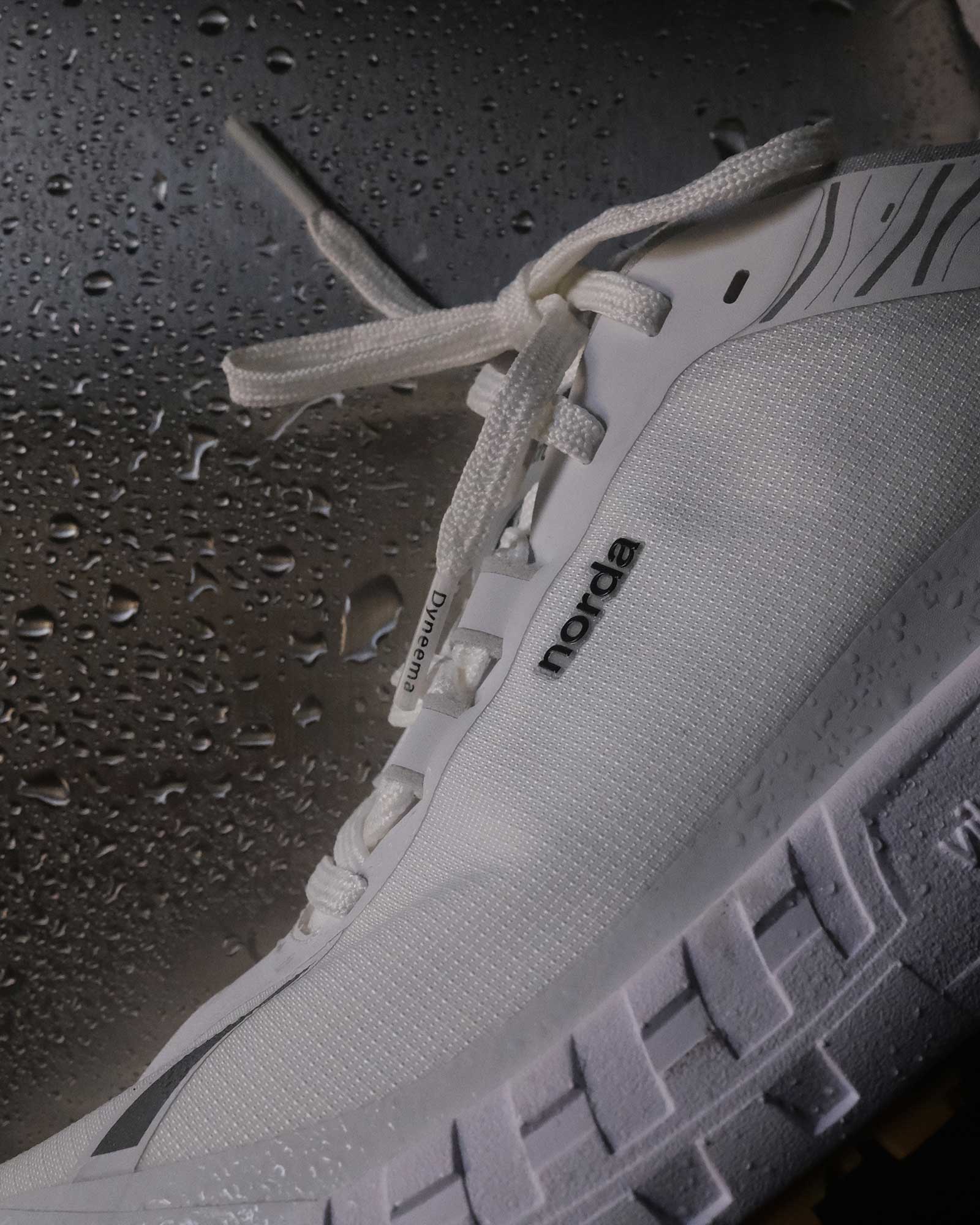
In performance footwear, materials are often an afterthought, overshadowed by aesthetics or branding. For Norda, however, material choice is the foundation of their innovation, and Dyneema® sits at the center. Initially developed in 1963, Dyneema® is the strongest fiber in the world relative to its weight. With a tensile strength greater than steel, it has found its way into applications as varied as ballistic vests and high-performance ropes. In Norda’s hands, trail-running shoes transform into something entirely new.
The use of Bio-Dyneema® in Norda’s uppers sets a benchmark for durability. Its abrasion resistance surpasses Kevlar, allowing it to shrug off sharp rocks, abrasive sand, and rugged terrain—conditions that quickly degrade traditional running shoes. Yet this strength doesn’t come at the expense of flexibility or breathability, as the seamless construction molds to the foot while allowing airflow.
Dyneema®’s significance goes beyond its physical properties. The bio-based version Norda uses is manufactured through a BlueSign-certified process that relies on 75% renewable energy, substantially lowering its environmental footprint. For Norda, the alignment between performance and ecological responsibility is a core principle, and Bio-Dyneema® represents a meaningful step toward reducing material waste and emissions.
Paired with Vibram® midsoles and outsoles, Dyneema® plays a broader role in the shoe’s performance. Vibram®’s Litebase® and Megagrip® technologies reduce weight while enhancing traction, allowing runners to focus entirely on the trail.
Dyneema® isn’t just a clever addition to Norda’s footwear—it’s an argument for what thoughtful material innovation can achieve.


